What to Wear for Après-Ski: Cozy Sweater and Layering Ideas
What to wear for après-ski, even if you never hit the slopes: cozy sweater and hoodie pairings, colors, warm fabrics, accessories and easy layering tips.
Nội dung bài viết
Après-ski is the part of the day when everyone peels off their gear, warms up by a fire and settles in with something hot to drink. The look that goes with it is cozy, relaxed and a little polished, and you do not need to have skied a single run to wear it.
This works for a mountain weekend, a cabin trip, a winter market, or just a cold night with friends. Here is how to build the outfit from the inside out.
Start with the base layer
Everything begins with what touches your skin. If you have been out in the cold, a thin, soft long-sleeve shirt feels better than a stiff one. Look for something smooth that does not itch at the neck or wrists. If you tend to sweat when you move and chill when you stop, a base layer that feels dry and breathable will keep you more comfortable than a thick cotton tee.
For a casual night, a plain tee or a lightweight henley is enough. The goal is a surface that feels good under heavier pieces and does not bunch up.
The sweater is the star
A chunky sweater is the classic après-ski piece. Look for texture: cable knit, ribbed knit or a soft fuzzy weave all look warm before you even touch them. Roomy shapes feel more relaxed, while a slightly cropped or fitted cut can look sharper over a collared shirt.
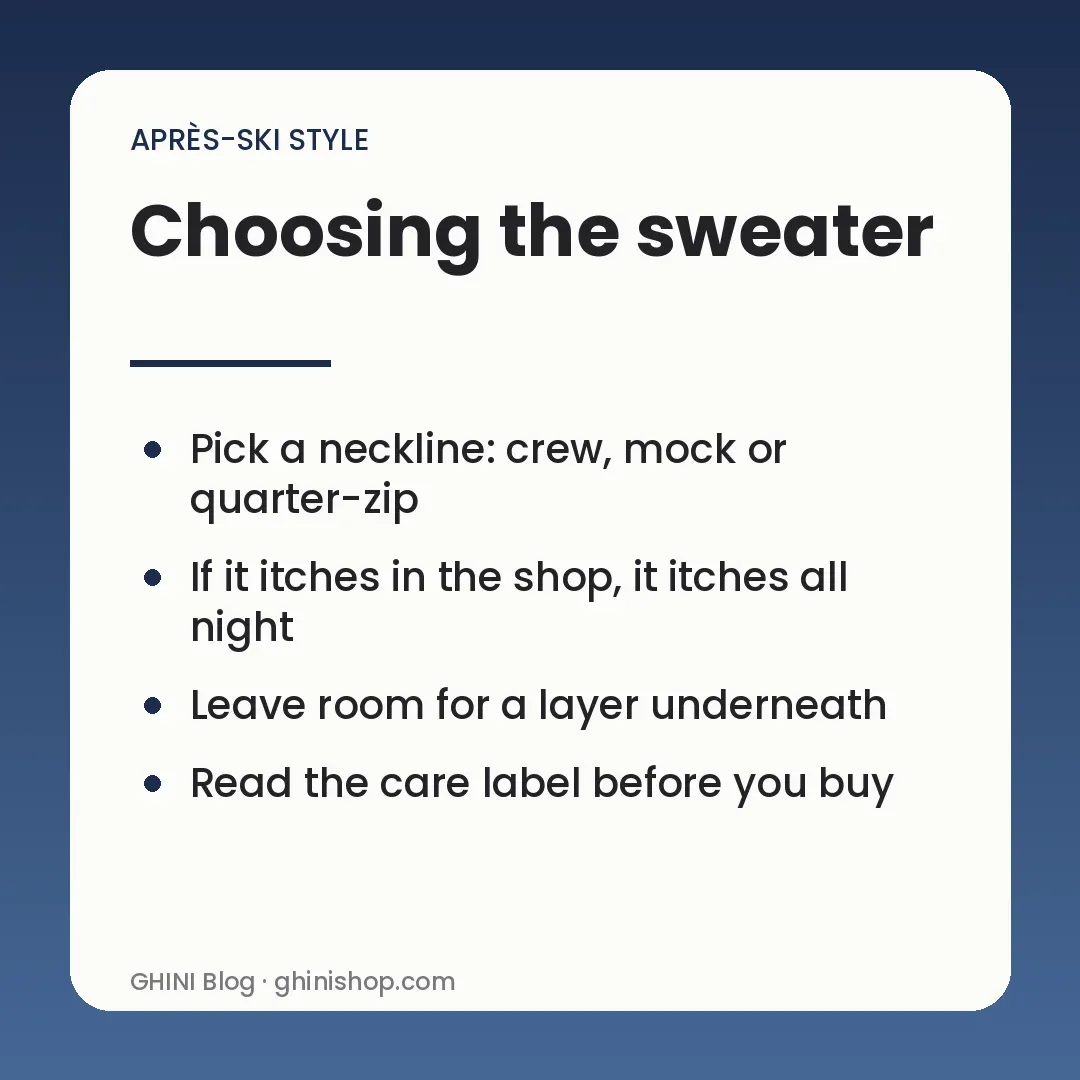
Some tips for choosing one:
- Pick a neckline you like. A crew neck is classic, a mock neck holds heat, and a quarter-zip is easy to adjust.
- Check how it feels on your neck and wrists. If it itches in the shop, it will itch all evening.
- Choose a fit that lets you wear a layer underneath without feeling squeezed.
- Read the care label. A sweater you are afraid to wash will stay in the closet.
When a hoodie or sweatshirt works better
Not every cozy night calls for a knit. A thick hoodie or crewneck sweatshirt is just as at home by the fireplace, and it is often the better pick if you want something easy to throw on and wash. A plain or lightly printed sweatshirt reads casual and comfortable, while a design with a winter, mountain or holiday theme fits the mood without trying too hard.
A good rule: if the sweater is the dressier choice, the hoodie is the lounging choice. Mix them by wearing a hoodie under a vest or open cardigan, with the hood tucked out of the way.
Colors that suit the season
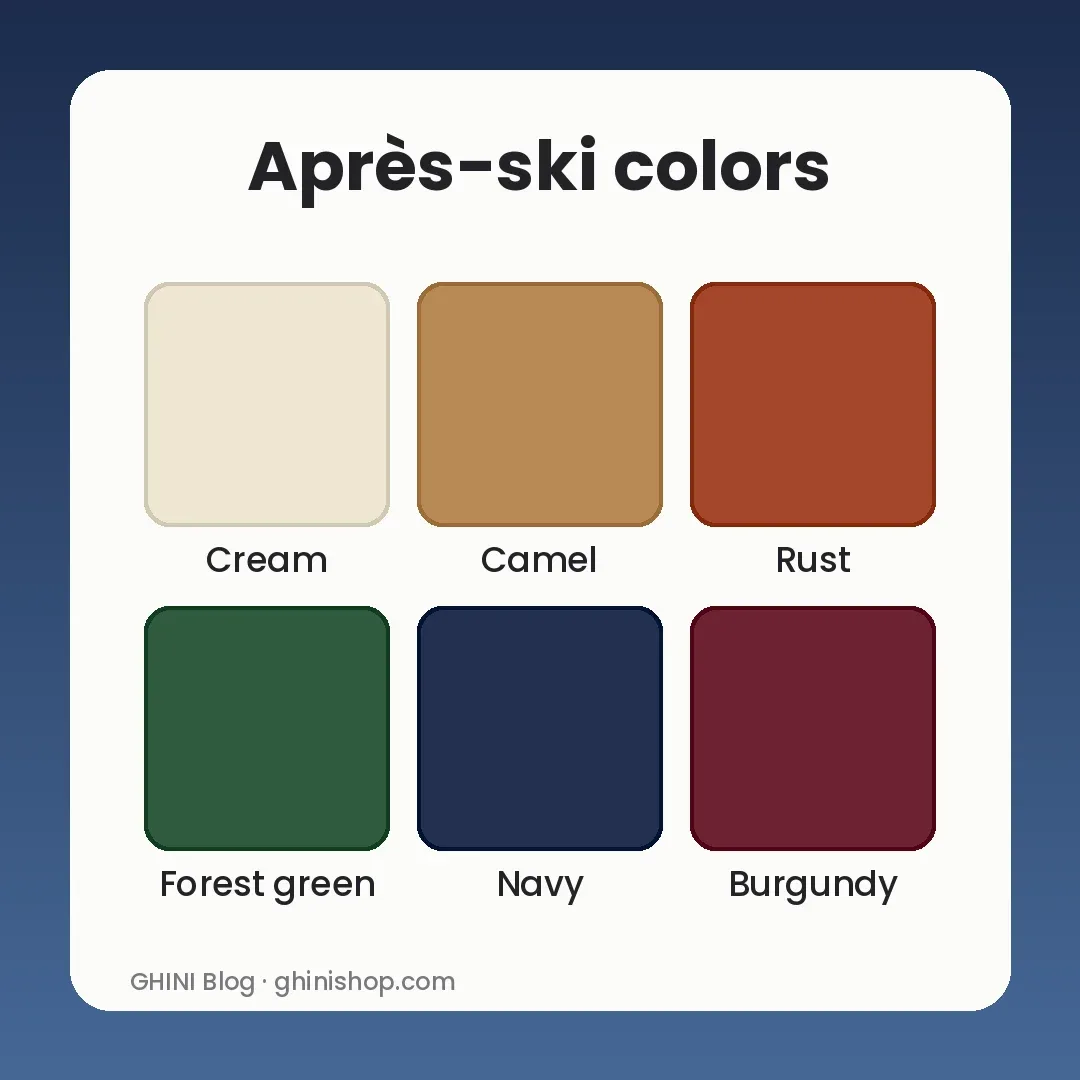
Winter colors tend to fall into two families. Warm and earthy shades like cream, oatmeal, rust, camel and forest green look natural against wood, stone and snow. Deep, cool shades like navy, charcoal and burgundy look rich in low light and hide small spills.
For a photo-friendly look, try one neutral base with one color accent. For example, a cream sweater with dark jeans and a red scarf. If you prefer to keep things simple, choose a single color family and vary the textures.
Warm materials, in general
You do not need to memorize fabric names. A few general ideas are enough.
- Wool and wool blends are known for holding warmth, though some people find them scratchy on bare skin.
- Fleece and brushed fabrics feel soft and trap warmth well, and they are usually easy to care for.
- Cotton blends are comfortable and easy to wash, but they can feel cool when damp, so wear them when you are mostly dry.
- Thick knits hold heat through their structure as well as their fiber.
Whatever you choose, check the product description and care label rather than assuming. If you are wearing it right off the slopes, remember that damp layers will always feel colder.
Accessories that finish the look
Small pieces do a lot of work.
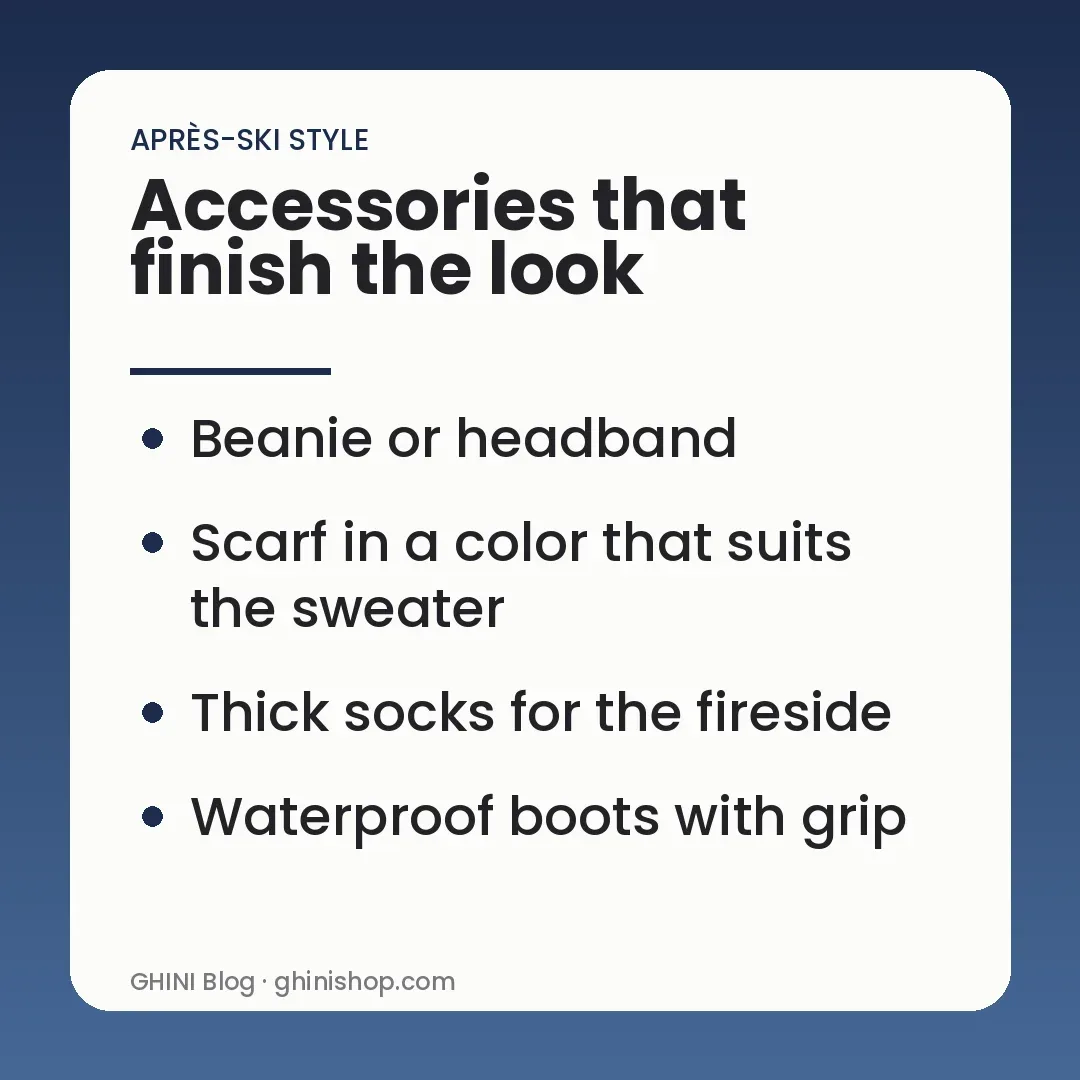
- A beanie or a headband for the walk from the car.
- A scarf or neck gaiter in a color that suits your sweater.
- Warm socks, ideally thick enough to wear without shoes by a fire.
- Gloves you can take on and off easily.
- Waterproof boots with a bit of grip for snowy parking lots.
- A cozy blanket or throw for the cabin couch.
If you are taking pictures, a hat and scarf add color without changing your main outfit.
Layering without looking bulky
The most common mistake is wearing too much of the same thickness. Instead, mix thin and thick.
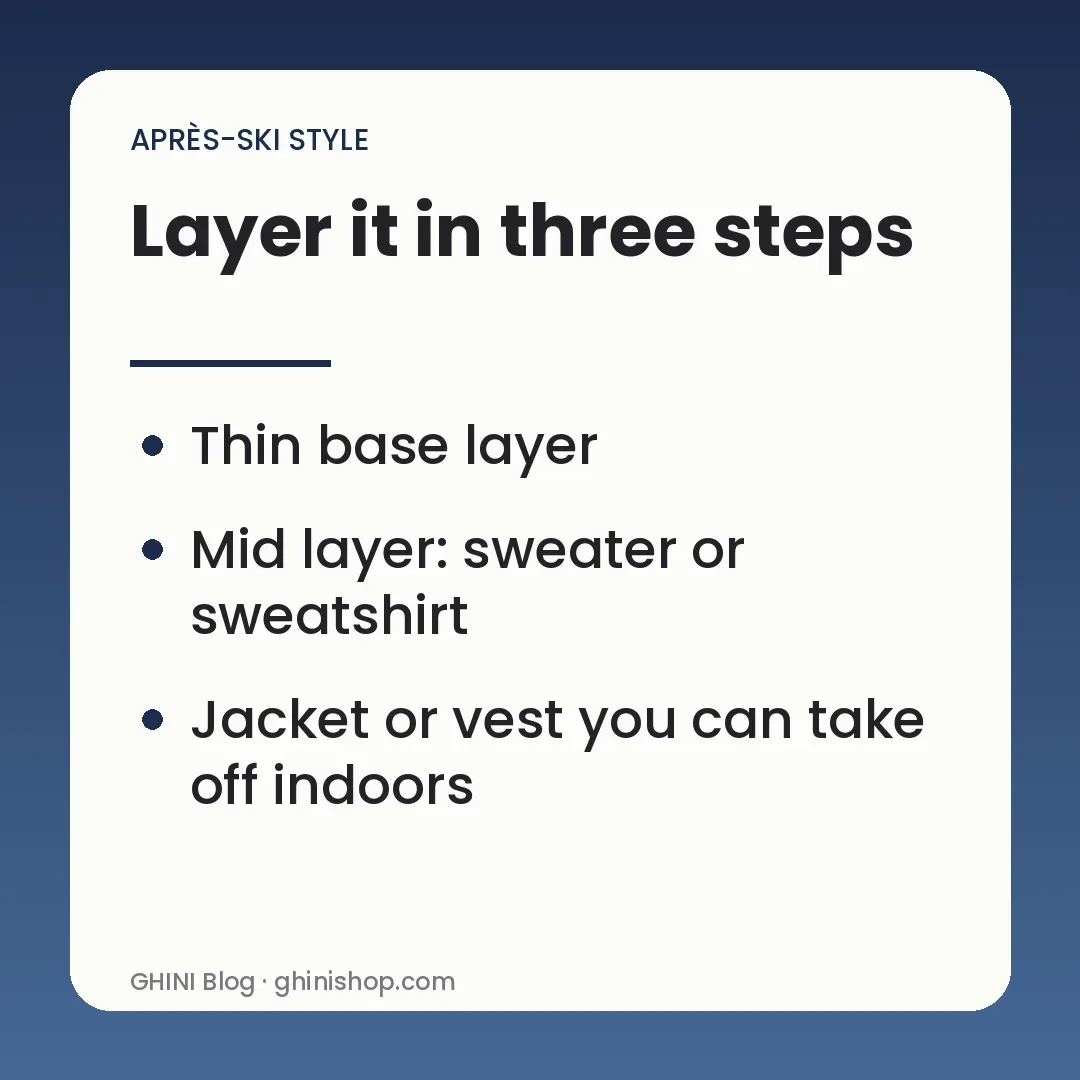
- Wear a thin base layer.
- Add a mid layer, such as a sweater or sweatshirt.
- Finish with a jacket or vest you can take off indoors.
- Keep the bottom half simple, like jeans, leggings or lined pants.
Keep each layer slightly longer or shorter than the one beneath, so the edges peek out and give the outfit shape. And make sure you can remove a layer easily. Mountain lodges are warm, and a coat will not feel cozy once you sit down.
Wearing it without the slopes
Plenty of people head to the mountains to sit by the fire and never touch a ski. The same outfit works at a winter market, a bonfire, a late-night walk or a holiday dinner at home. If you want your sweatshirt or sweater to carry the winter mood, a small design or simple message is plenty.
Choose something that feels good, move easily, and add one accent. That is all après-ski really asks of you.
Gift ideas before every holiday
One short email before each holiday with new GHINI designs and gift ideas. No spam, unsubscribe anytime.
By subscribing you agree to our Privacy Policy.